May 11, 2026
S&P 500 Financial Sector: Dependency Maps for 11 Key Segments
Comprehensive dependency maps analyzing macro factors and business dependencies for major S&P 500 financial companies across 11 distinct segments including banks, payment networks, asset management, insurance, and more.
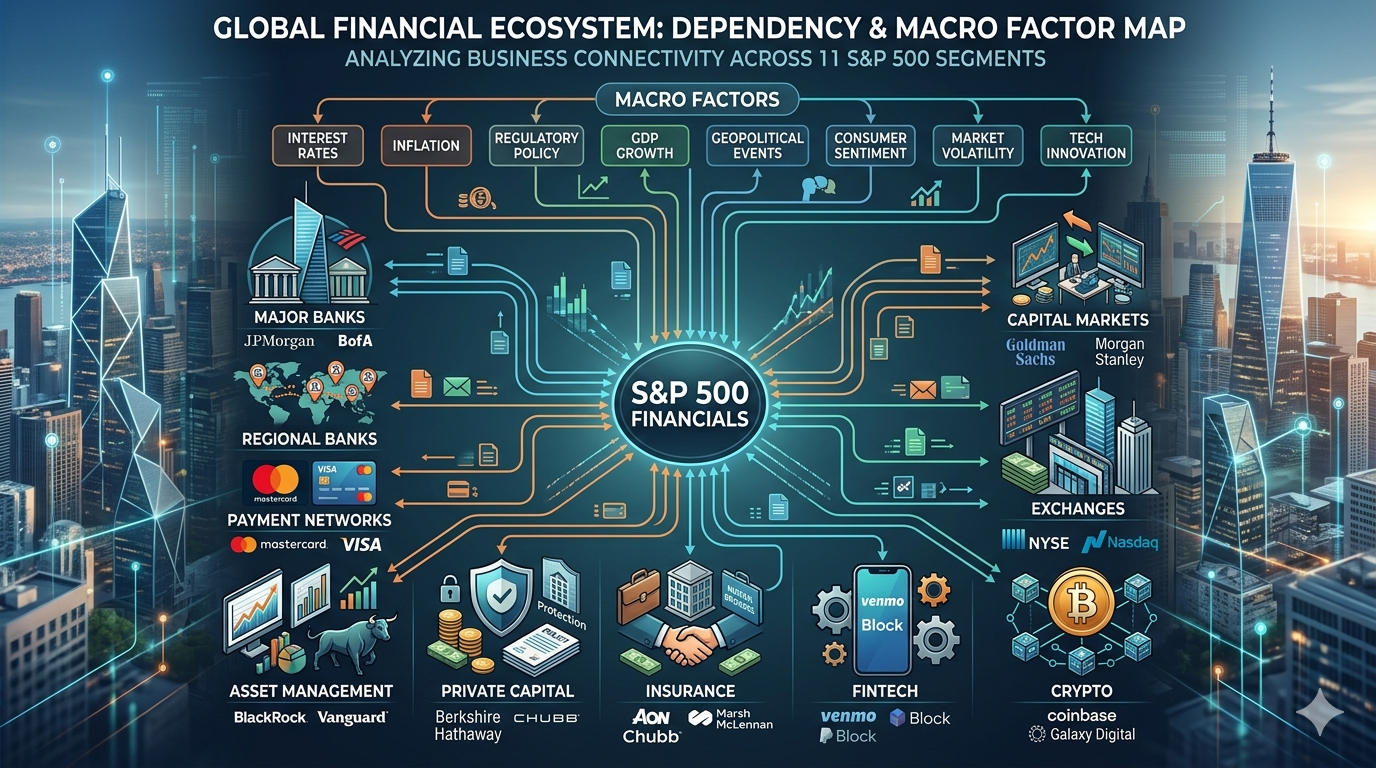
Understanding how financial companies interact with macroeconomic factors is crucial for fundamental analysis. This project maps the dependencies between major S&P 500 financial sector companies and the macro factors that drive their performance.
Project Overview
The goal is to develop a clear understanding of how different segments within the S&P 500 financial sector depend on various macroeconomic factors. By visualizing these relationships, we can better identify which companies benefit from specific economic conditions and which face headwinds.
Each dependency map shows:
- Macro Factors (top row): Economic conditions like interest rates, inflation, regulatory environment
- Companies (middle row): S&P 500 financial companies with their business models
- Annotation Panels (beneath companies): Tailwinds and headwinds for each company
- Correlation Lines: Color-coded connections showing how macro factors influence companies (solid = positive, dashed = negative, dot-dashed = mixed)
The 11 Financial Sector Segments
The S&P 500 financial sector companies have been classified into 11 distinct thematic segments:
- Major Banks - Large universal banks with diversified operations
- Regional Banks - Smaller banks with geographic concentration
- Payment Networks - Payment processing and card networks
- Asset Management - Investment management and advisory firms
- Alternative Assets - Private equity, hedge funds, and alternative investment managers
- Insurance - Life and property & casualty insurers
- Insurance Brokers - Risk advisory and brokerage services
- Capital Markets - Investment banking and brokerage firms
- Exchanges - Stock and derivatives exchanges
- Fintech Processing - Technology-enabled financial processing
- Crypto & Digital Finance - Digital asset and blockchain-related financial services
Click on any image to zoom in for better visibility, or download the maps using the links provided below each image.
1. Major Banks
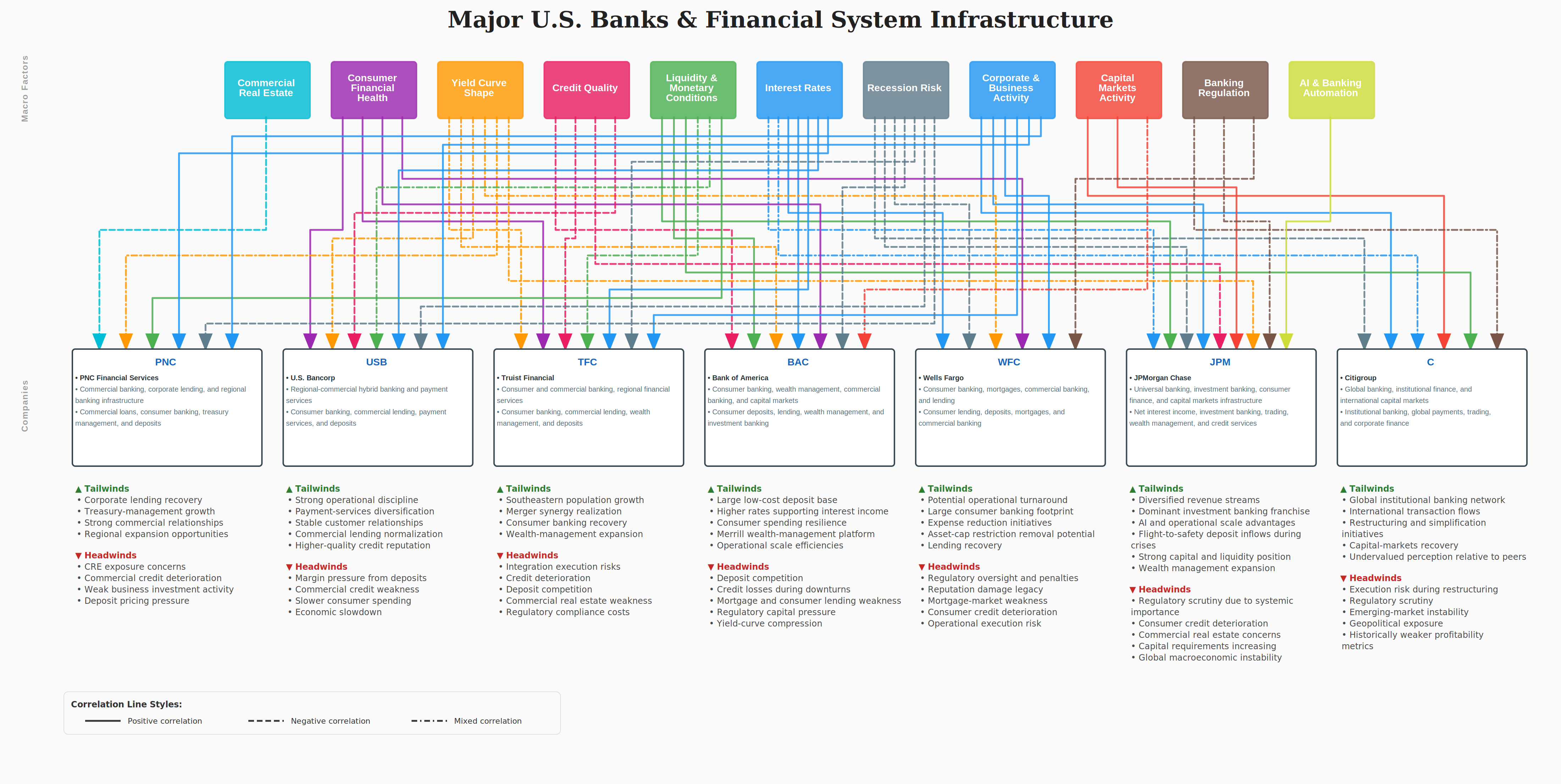
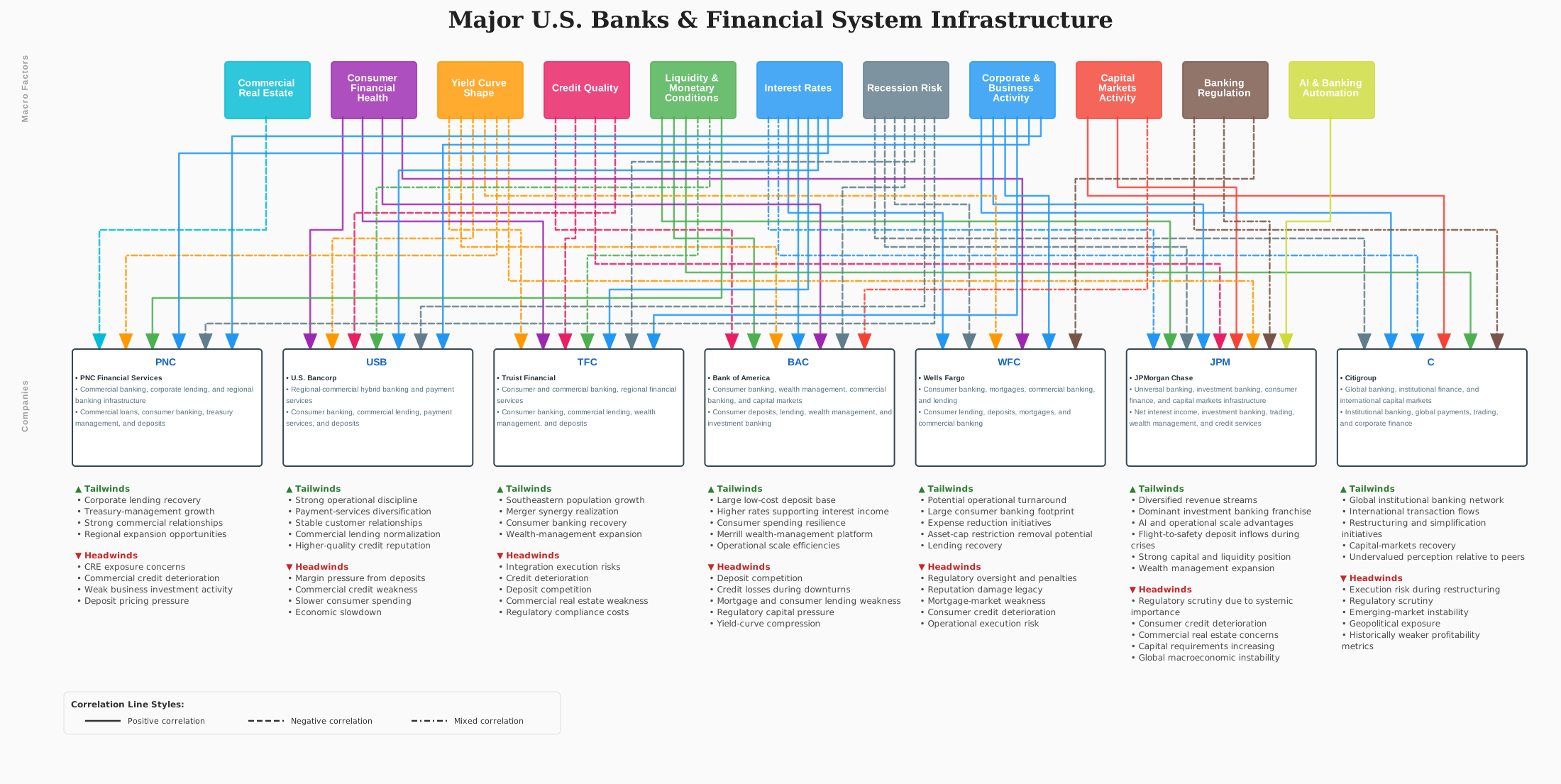
The major banks segment includes large universal banks with diversified operations across consumer banking, commercial banking, investment banking, and wealth management. These institutions are highly sensitive to interest rates, credit conditions, and regulatory changes.
2. Regional Banks
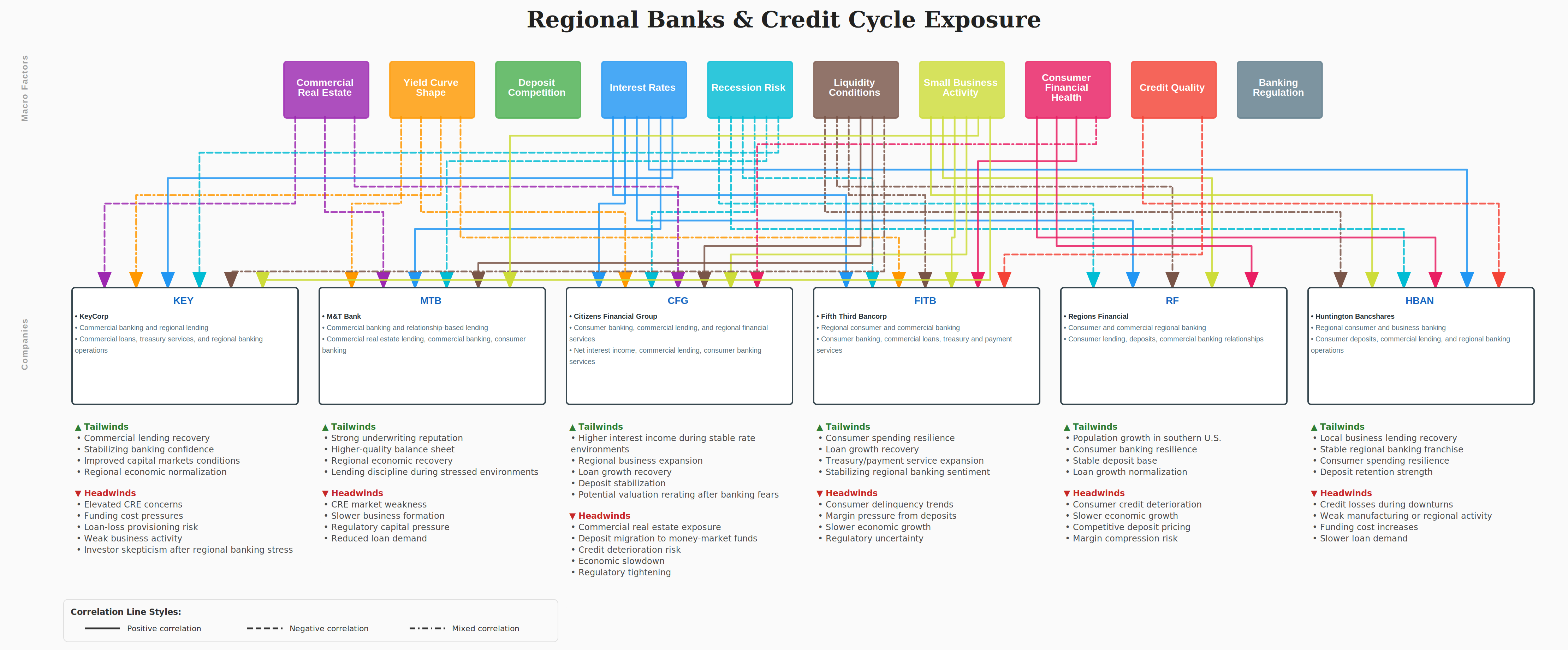
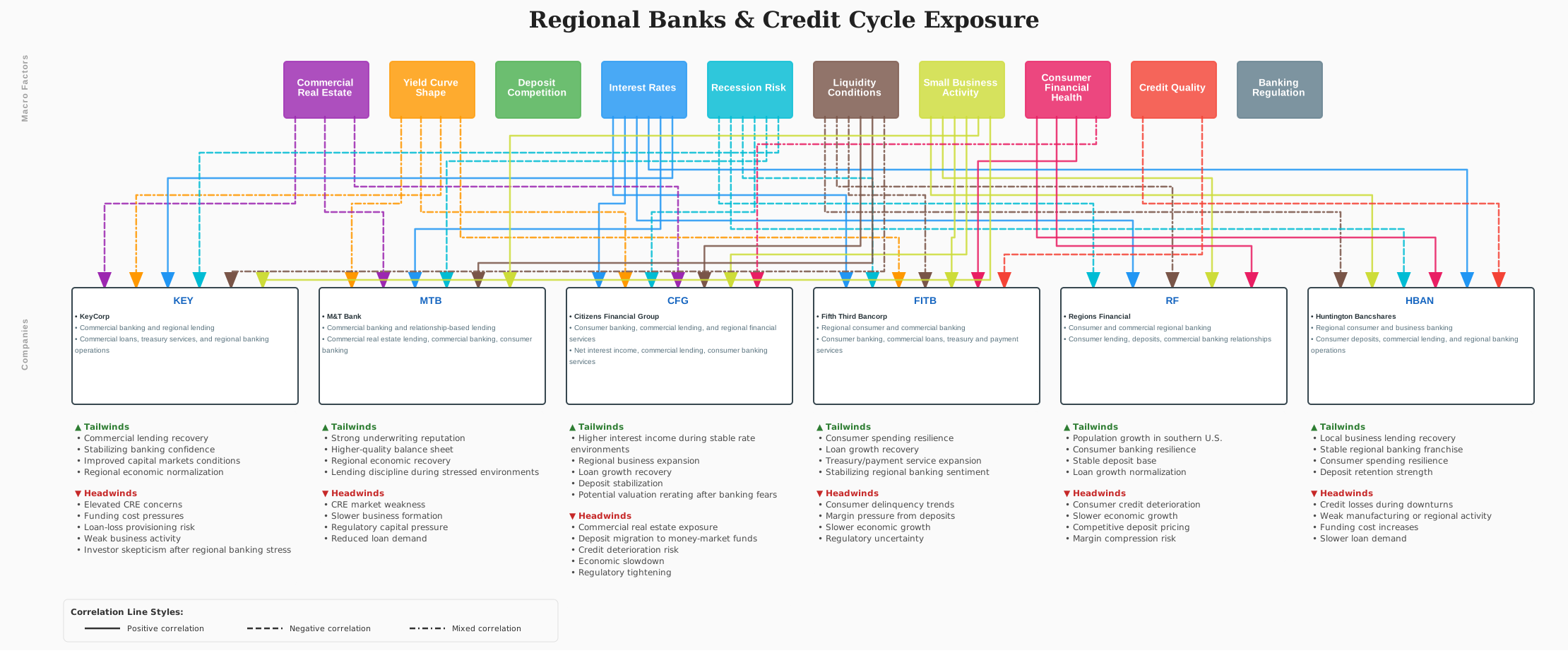
Regional banks focus on specific geographic markets with concentrated lending operations. They serve as important intermediaries connecting local businesses, consumers, and real estate markets to broader capital flows.
3. Payment Networks
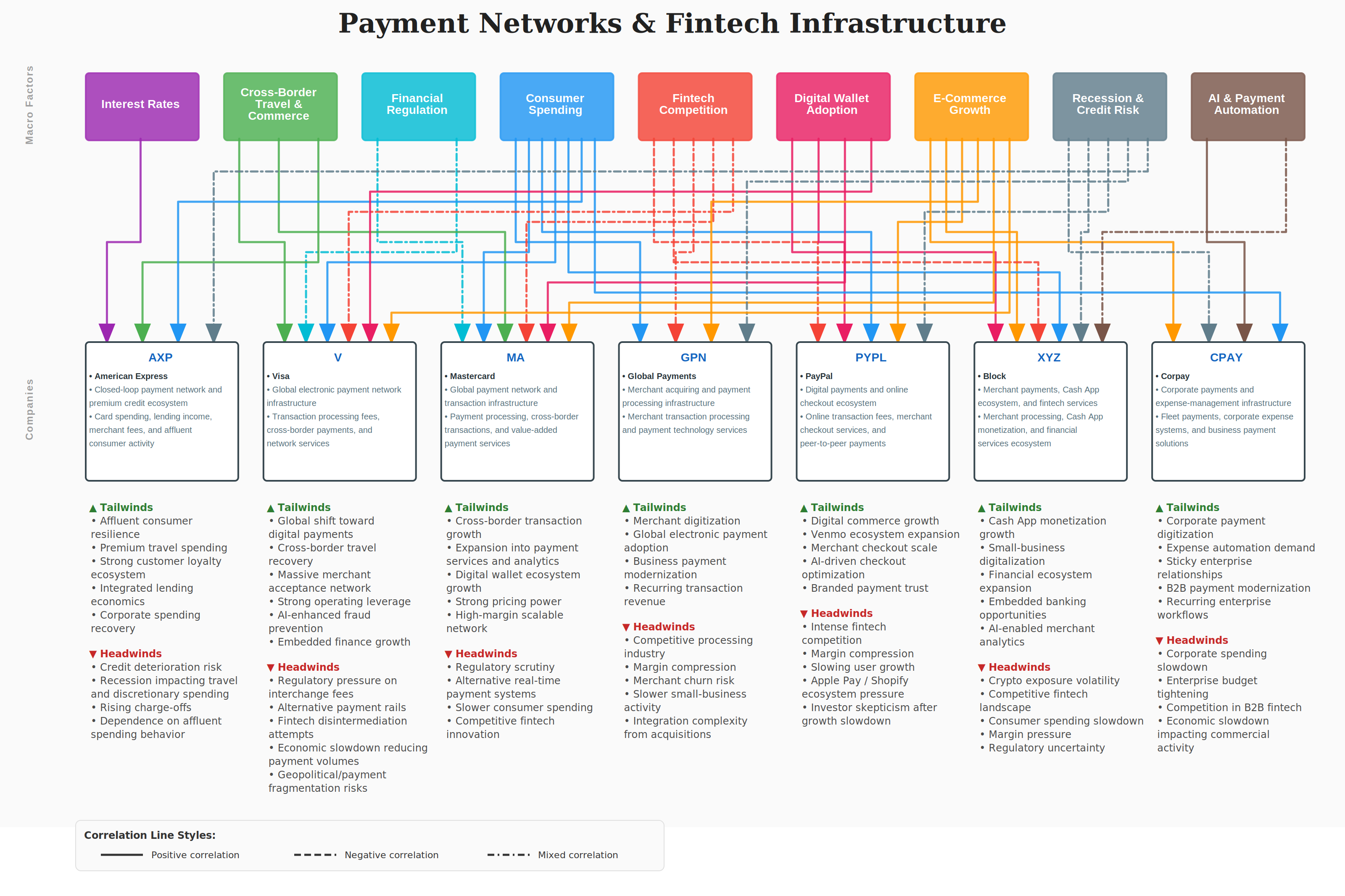
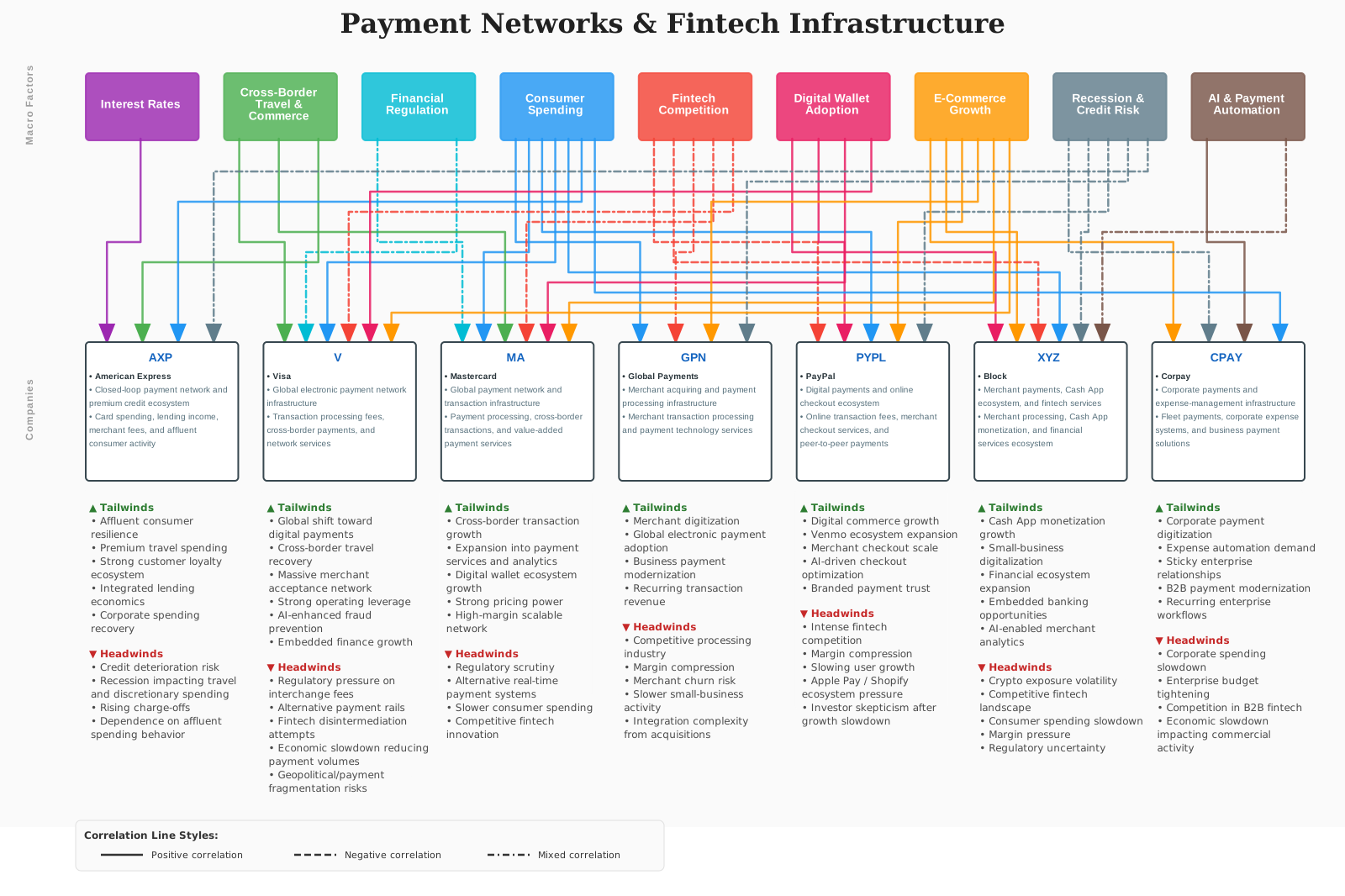
Payment networks form the digital infrastructure facilitating transactions globally. This segment includes card networks, payment processors, and emerging digital payment solutions that benefit from transaction volume growth and cash-to-digital shifts.
4. Asset Management
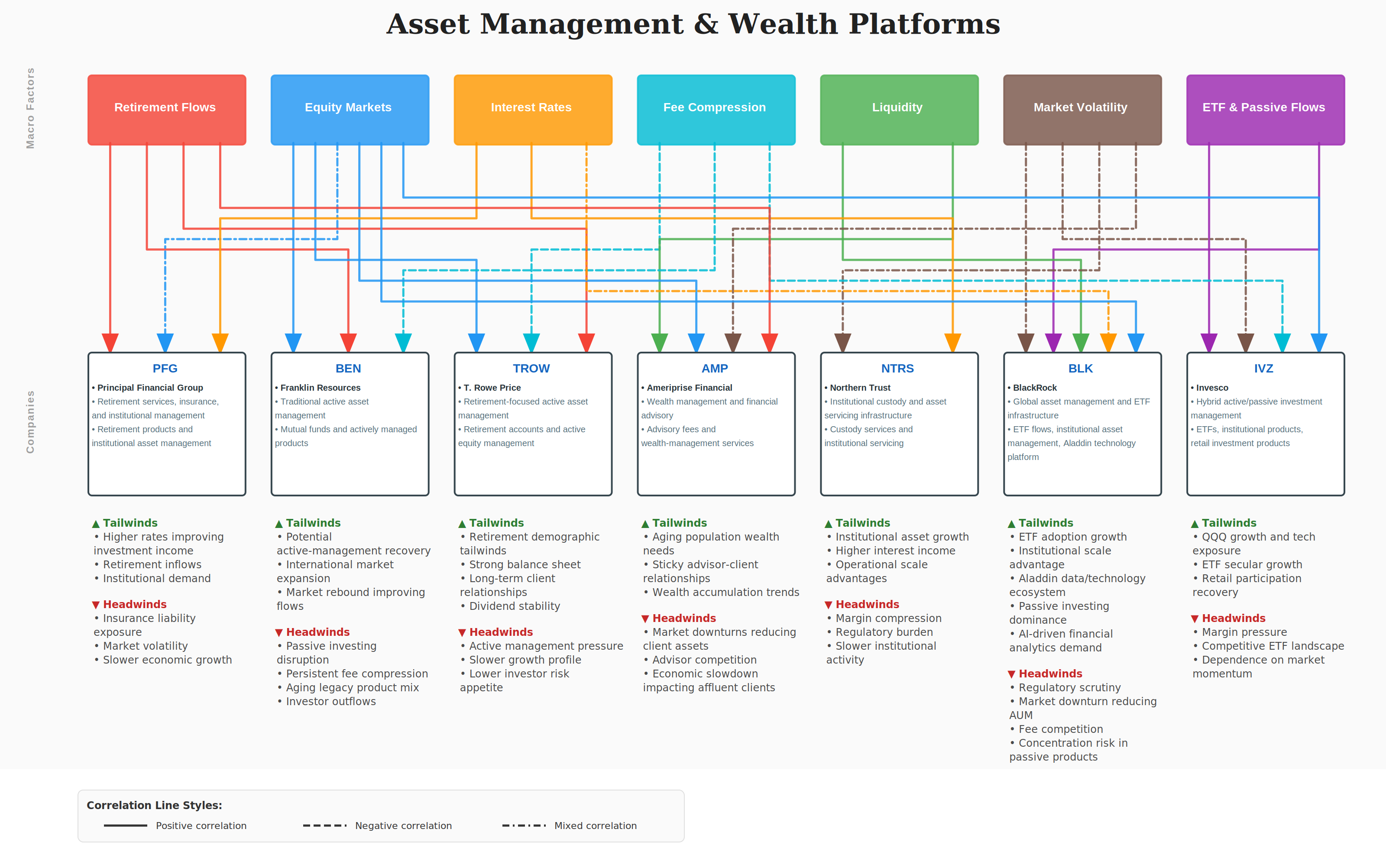
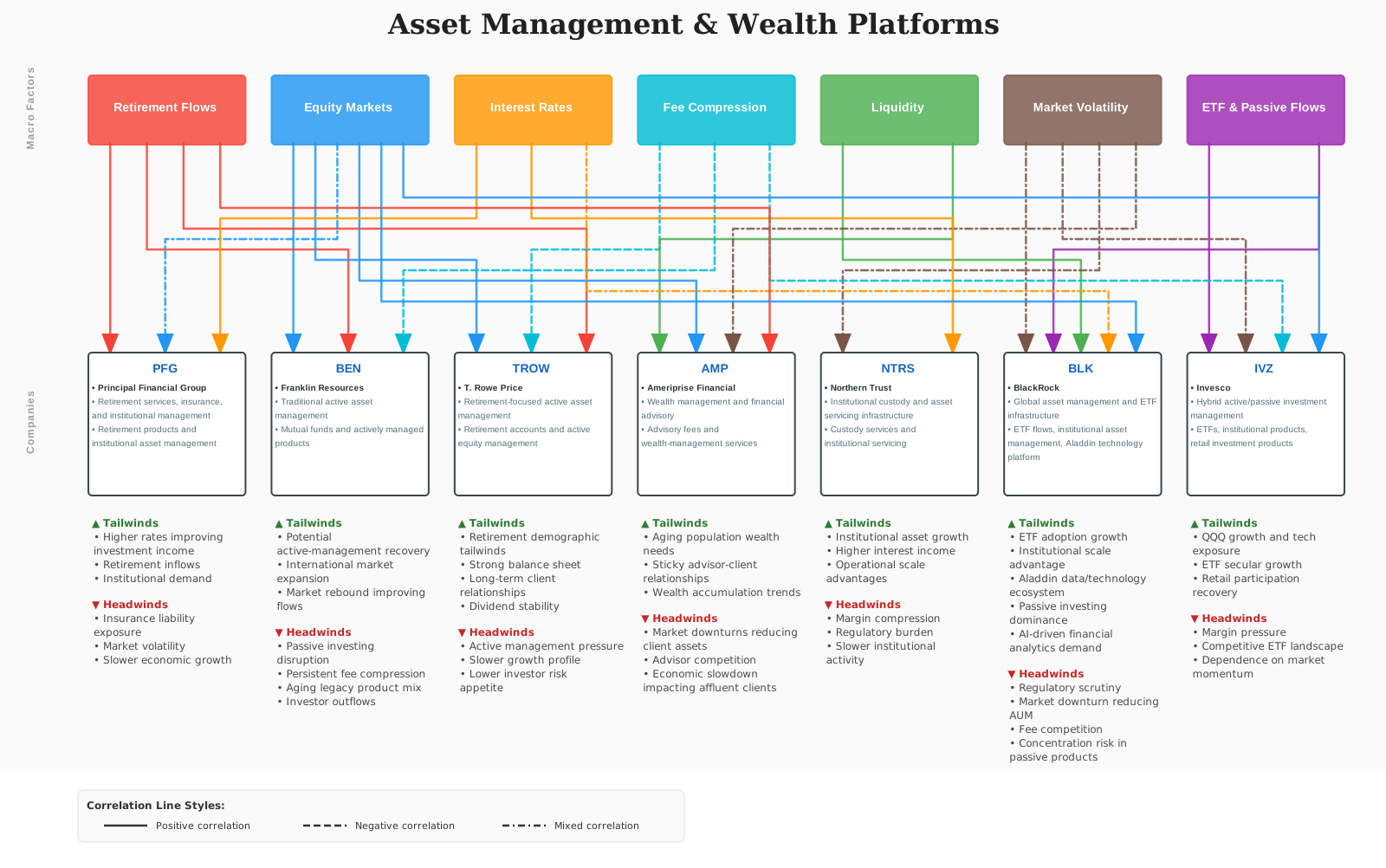
Asset managers provide investment products and advisory services to institutional and retail clients. Their performance is tied to market levels, asset flows, and investment performance across equity, fixed income, and alternative asset classes.
5. Alternative Assets
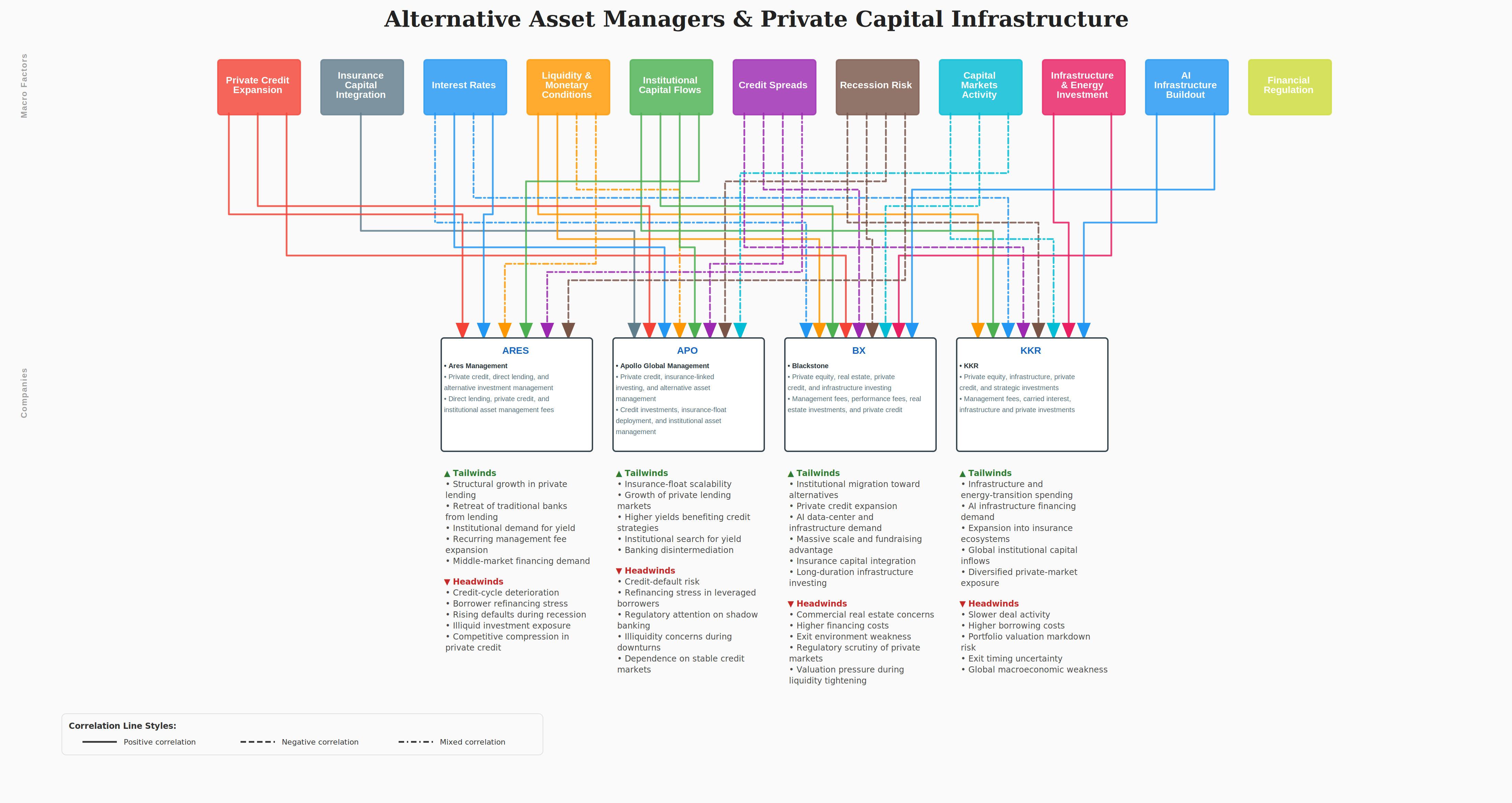
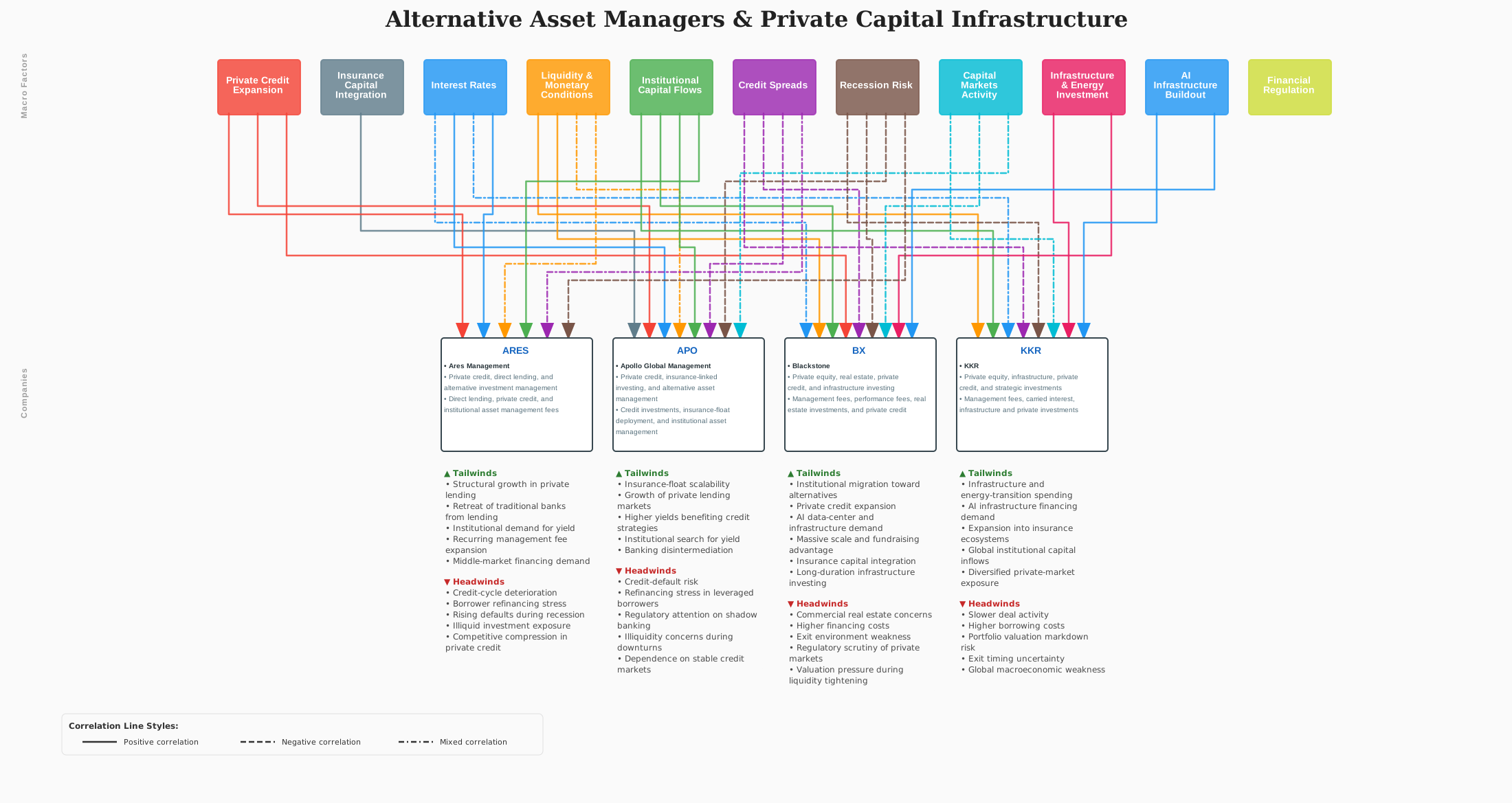
Alternative asset managers specialize in private equity, private credit, real estate, and hedge fund strategies. These firms benefit from institutional demand for yield and portfolio diversification beyond traditional markets.
6. Insurance
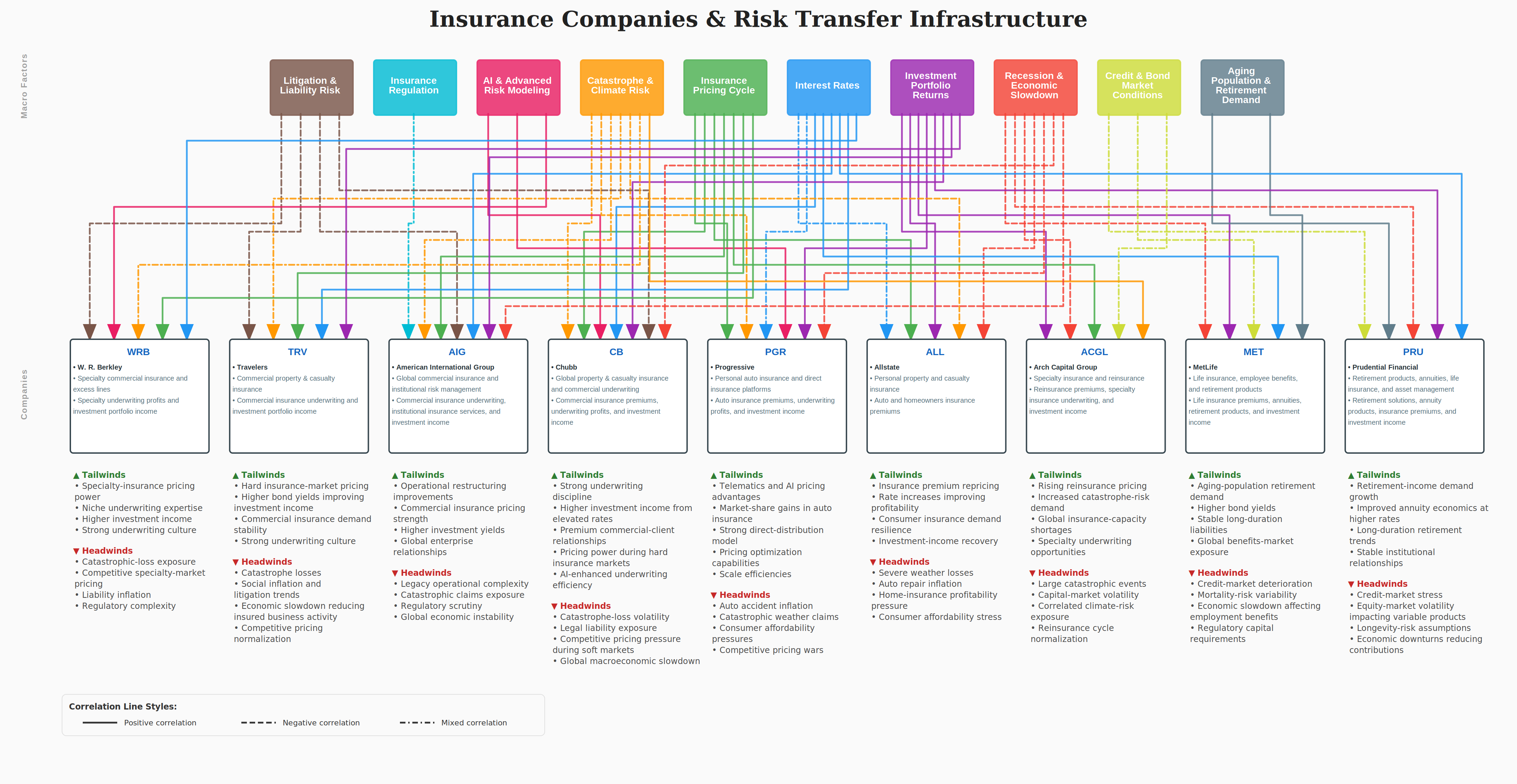
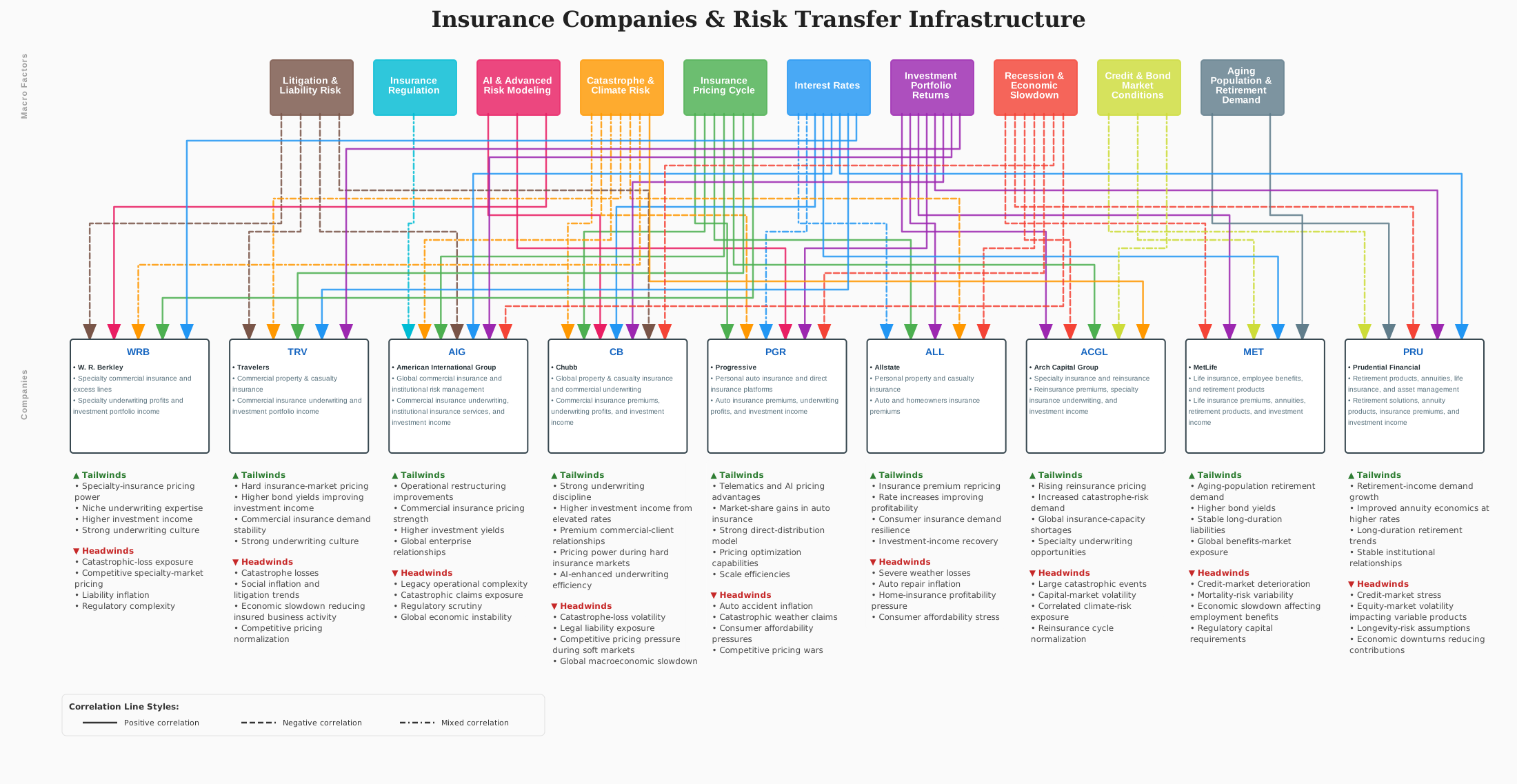
Insurance companies function as critical financial shock absorbers and long-duration capital allocators. Their performance depends on underwriting discipline, investment income from fixed-income portfolios, and catastrophe exposure management.
7. Insurance Brokers
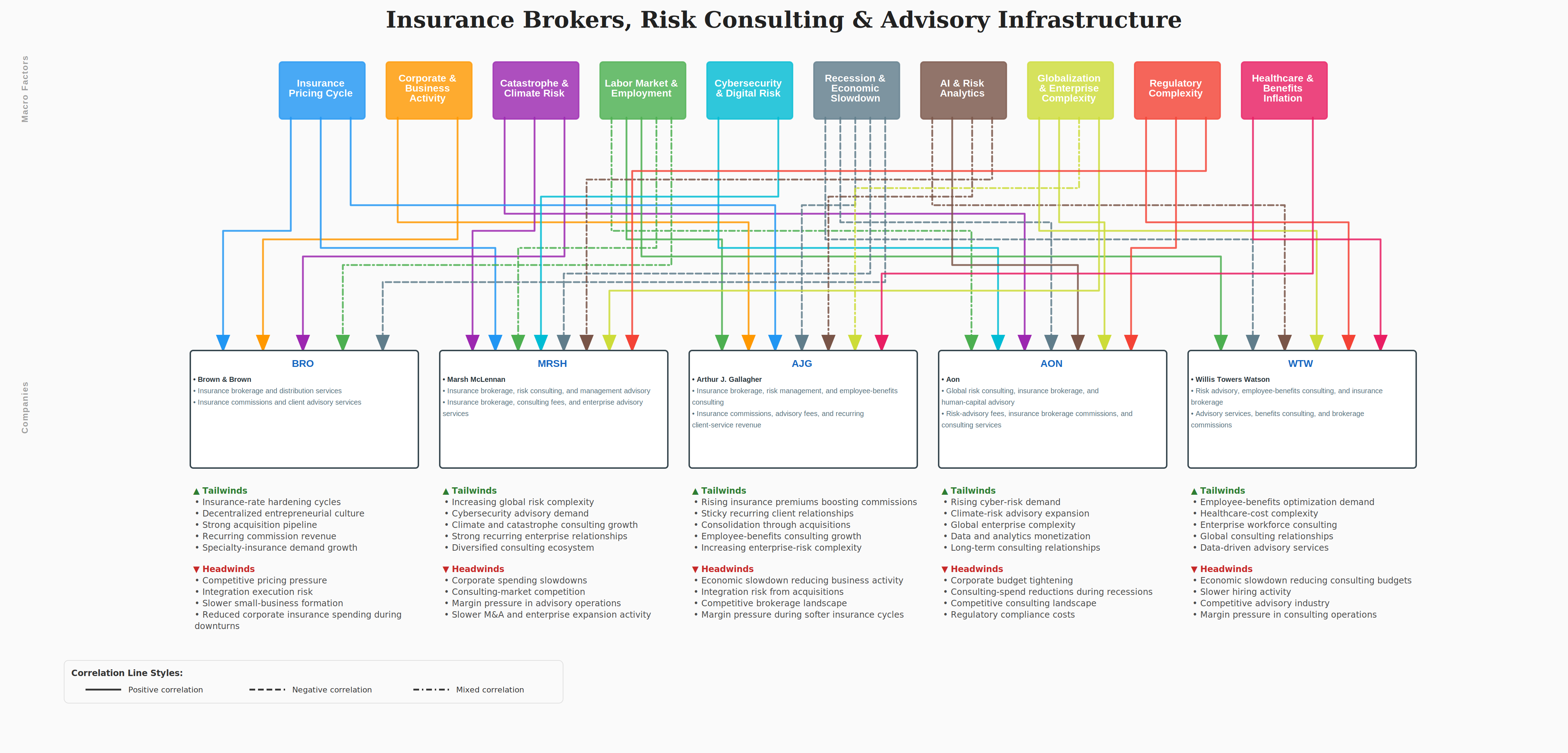
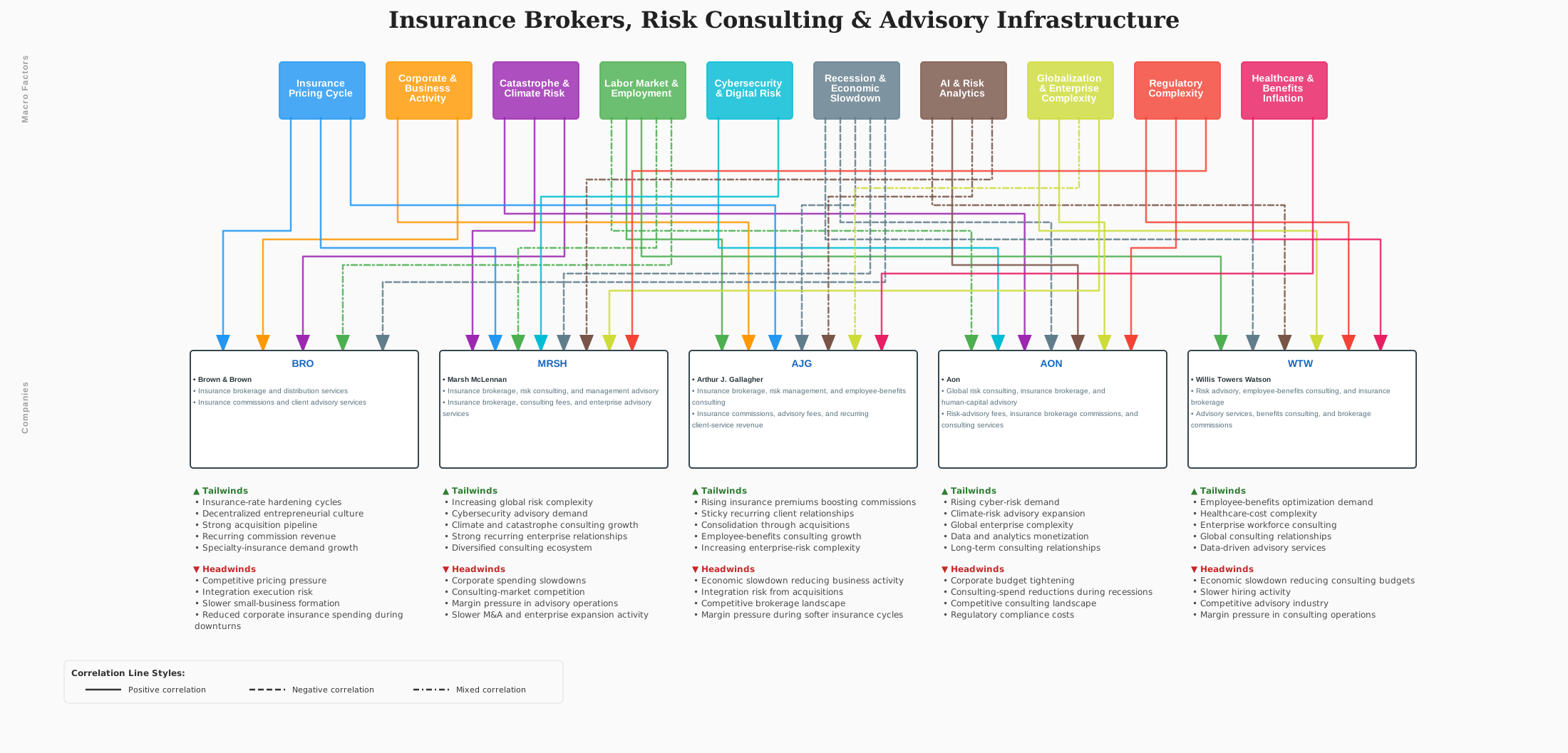
Insurance brokers provide risk advisory, brokerage services, and consulting. They benefit from increasing complexity in risk management and growing demand for specialized advisory services across cybersecurity, climate, and enterprise risk.
8. Capital Markets
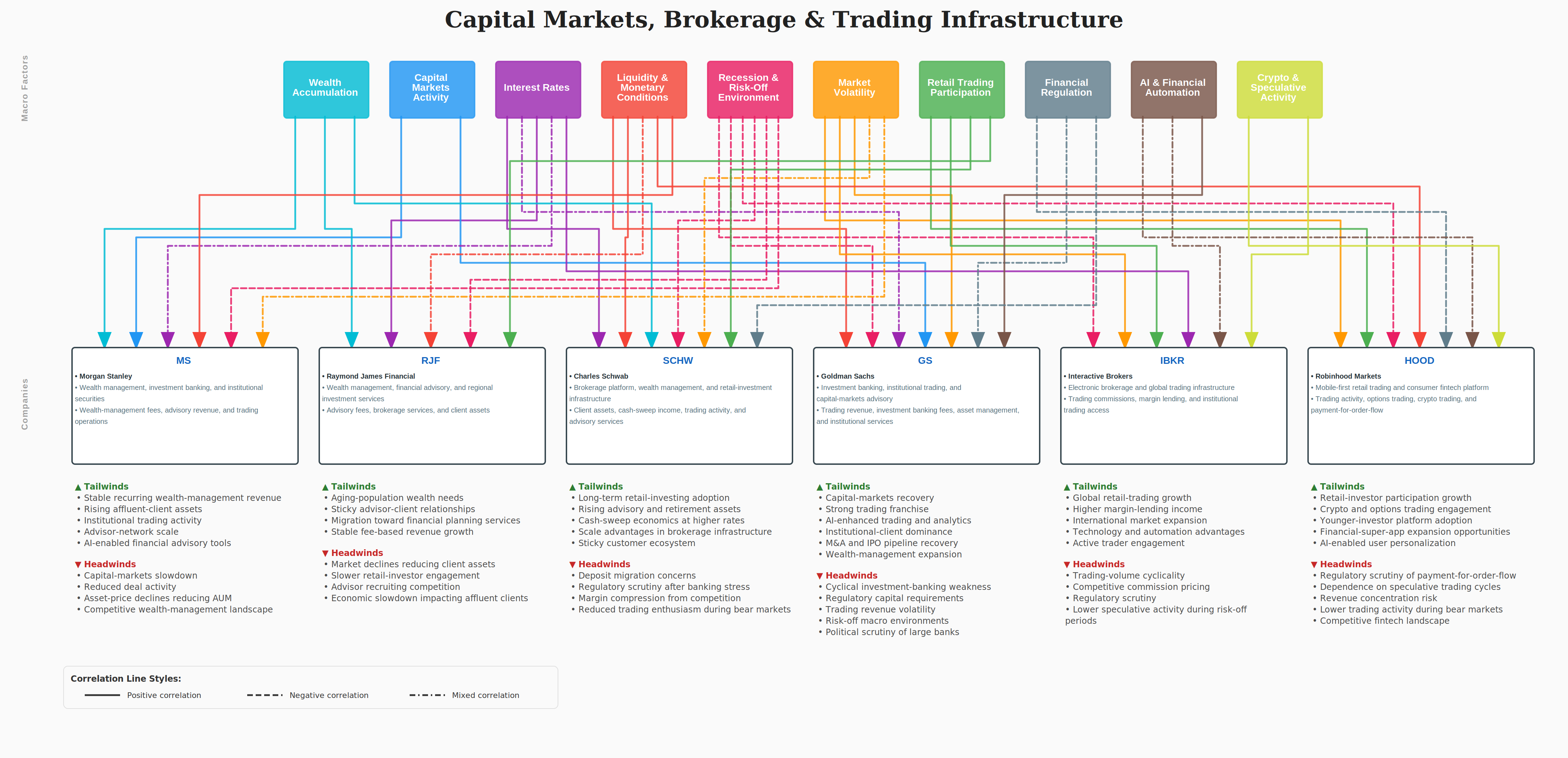
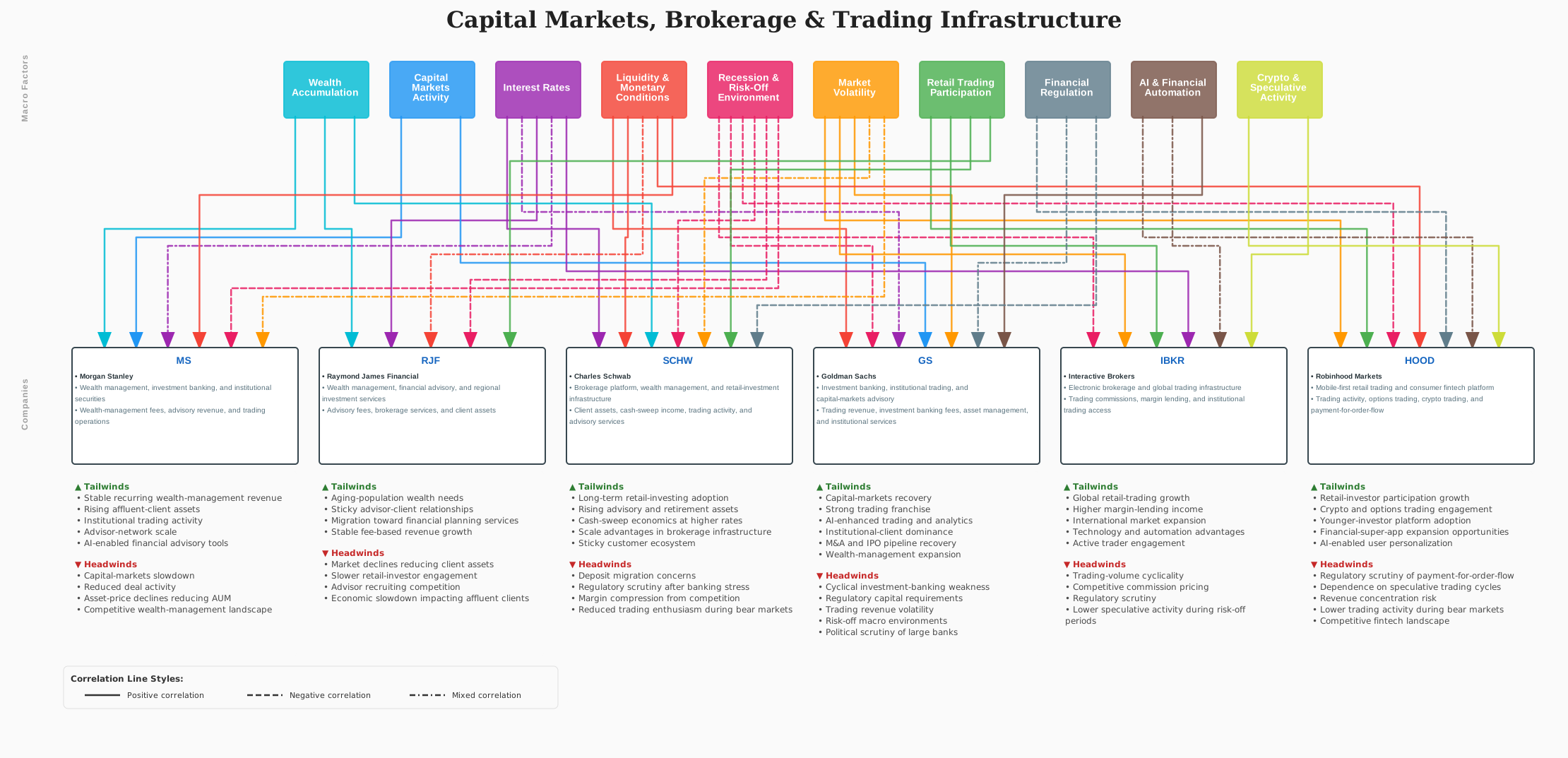
Capital markets firms provide investment banking, trading, and brokerage services. Their revenues are highly correlated with market volatility, IPO and M&A activity, and institutional trading volumes.
9. Exchanges
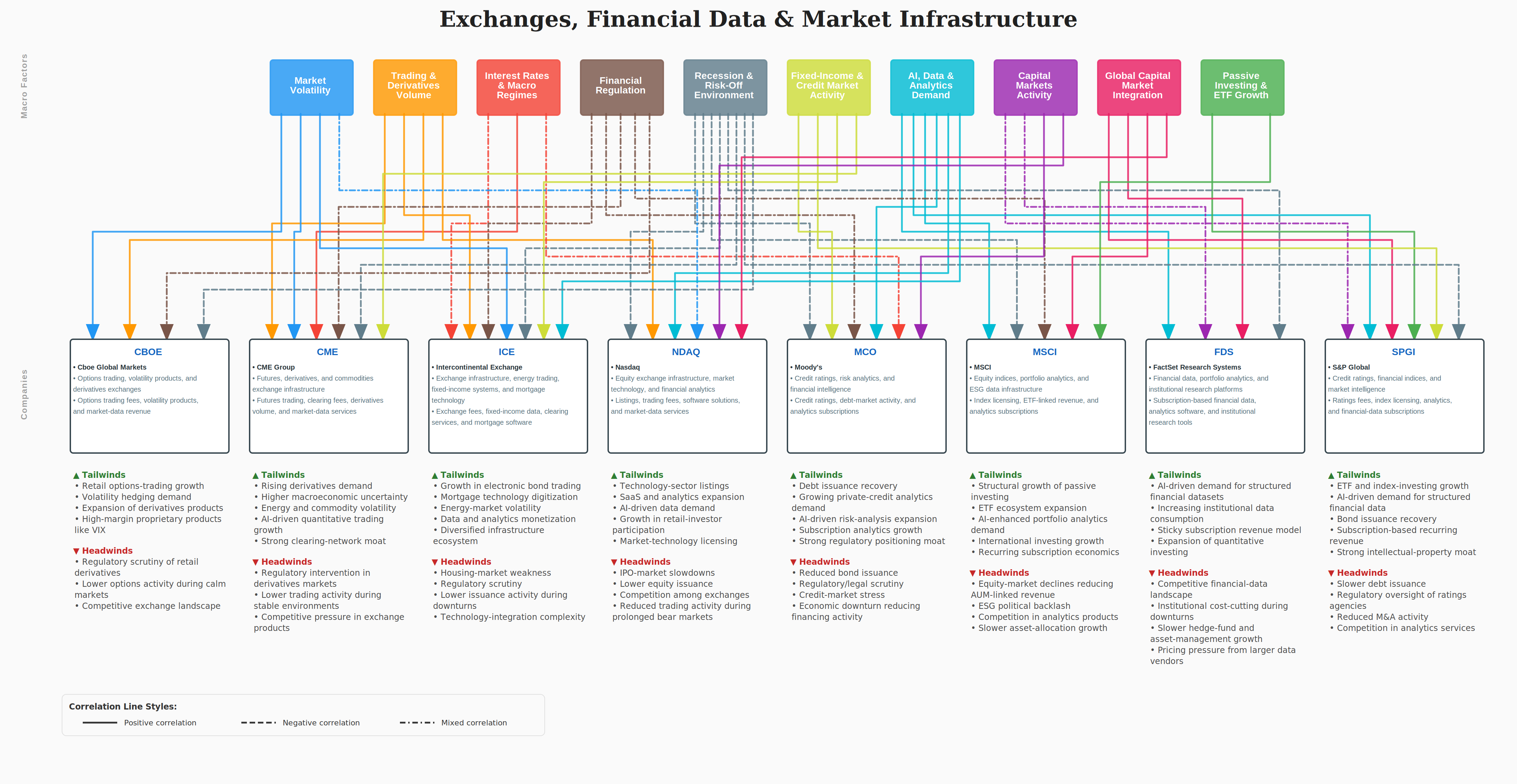
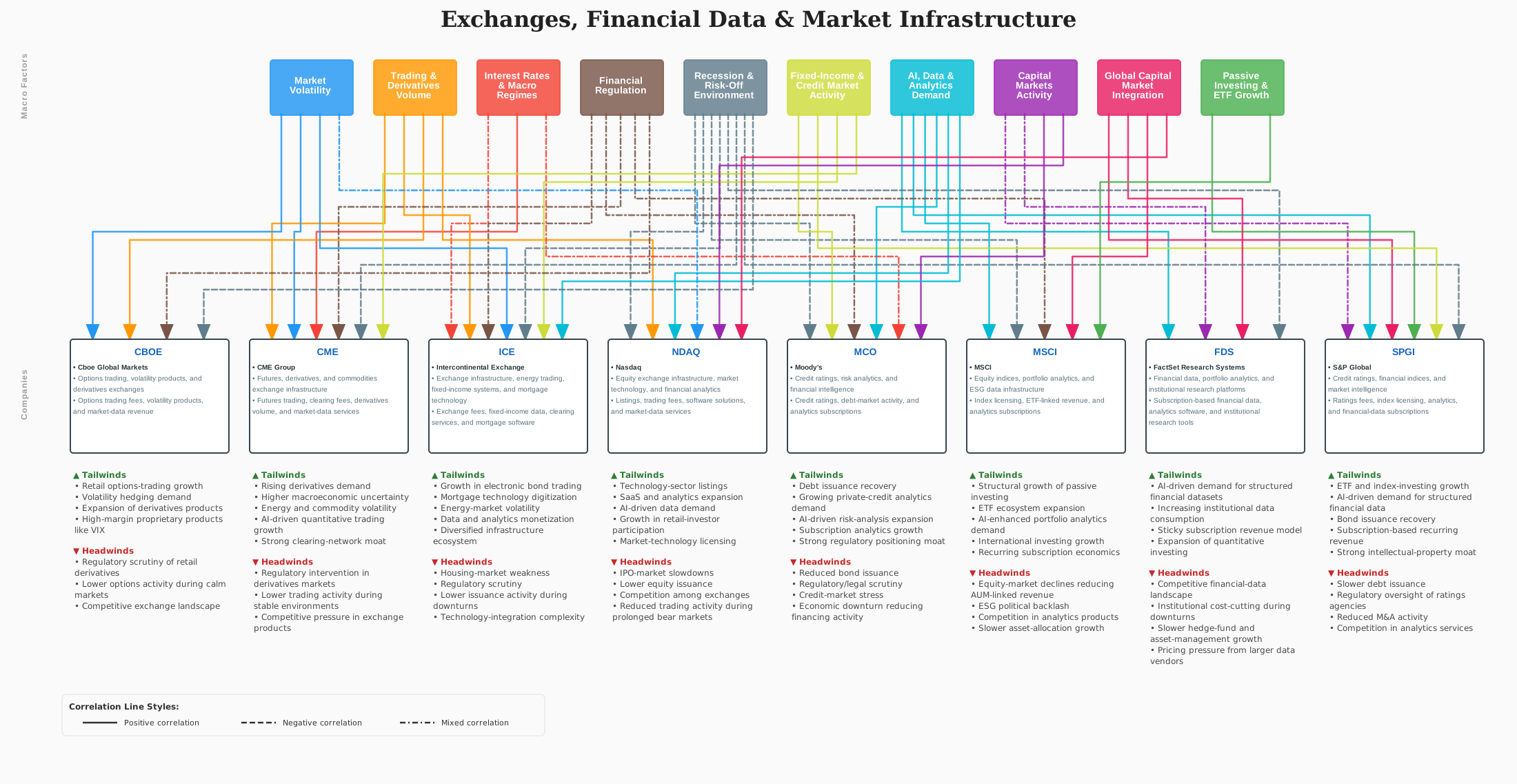
Exchanges operate market infrastructure for trading equities, derivatives, and fixed income. They benefit from market volatility, trading volumes, and the increasing complexity of financial instruments requiring centralized clearing.
10. Fintech Processing
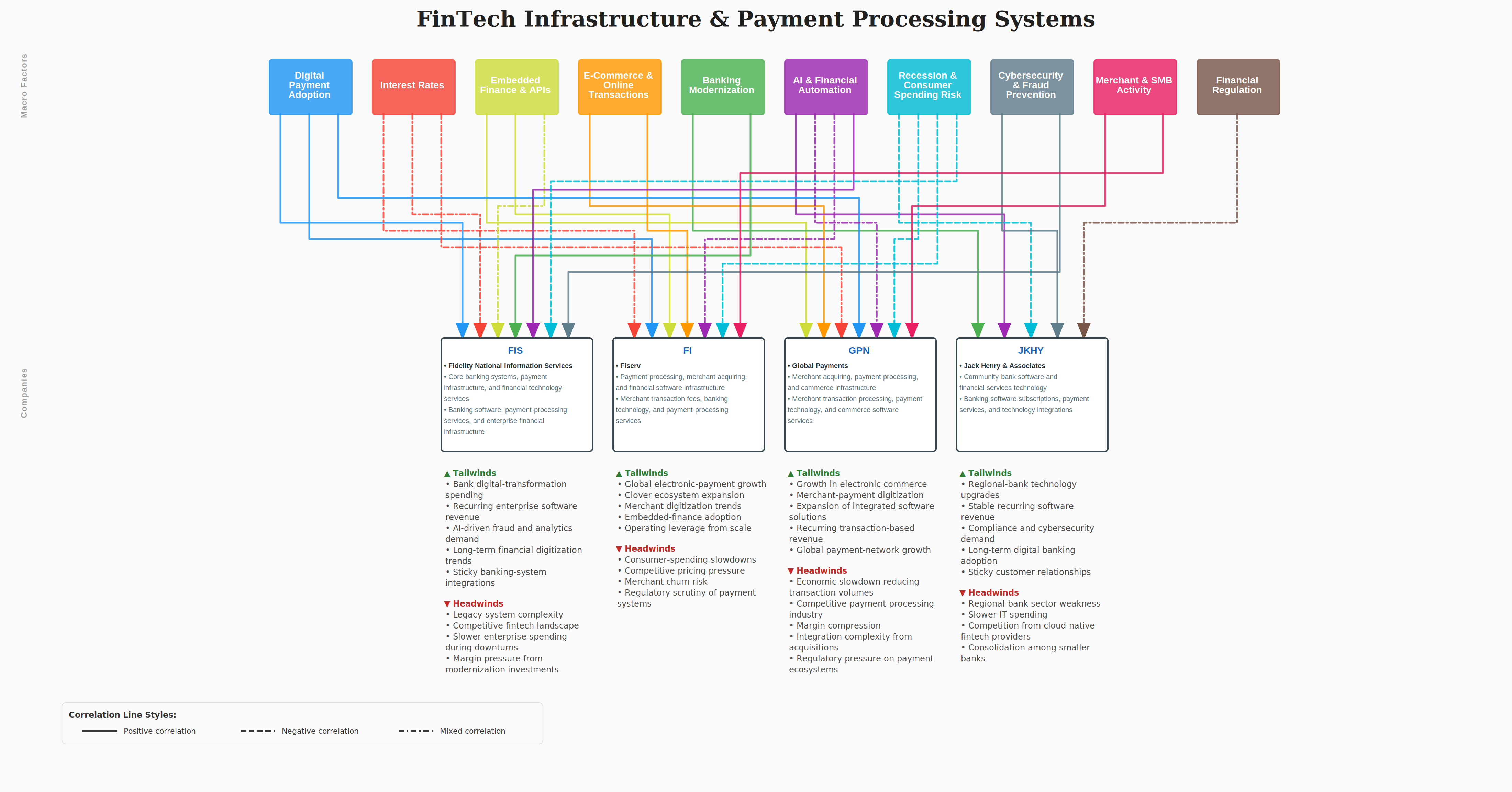
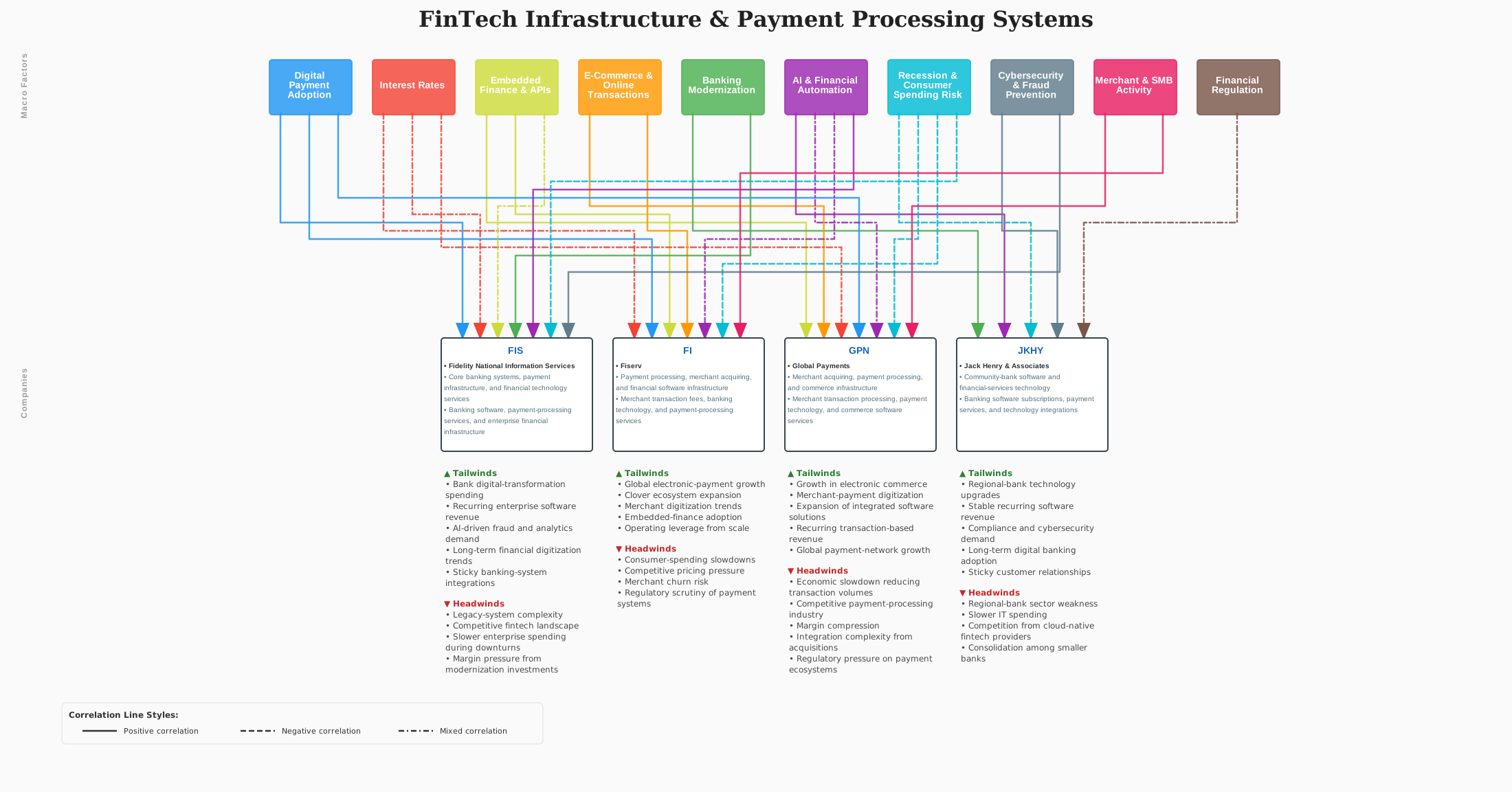
Fintech processing companies provide technology-enabled payment processing, lending platforms, and financial software solutions. They bridge traditional finance with modern technology infrastructure.
11. Crypto & Digital Finance
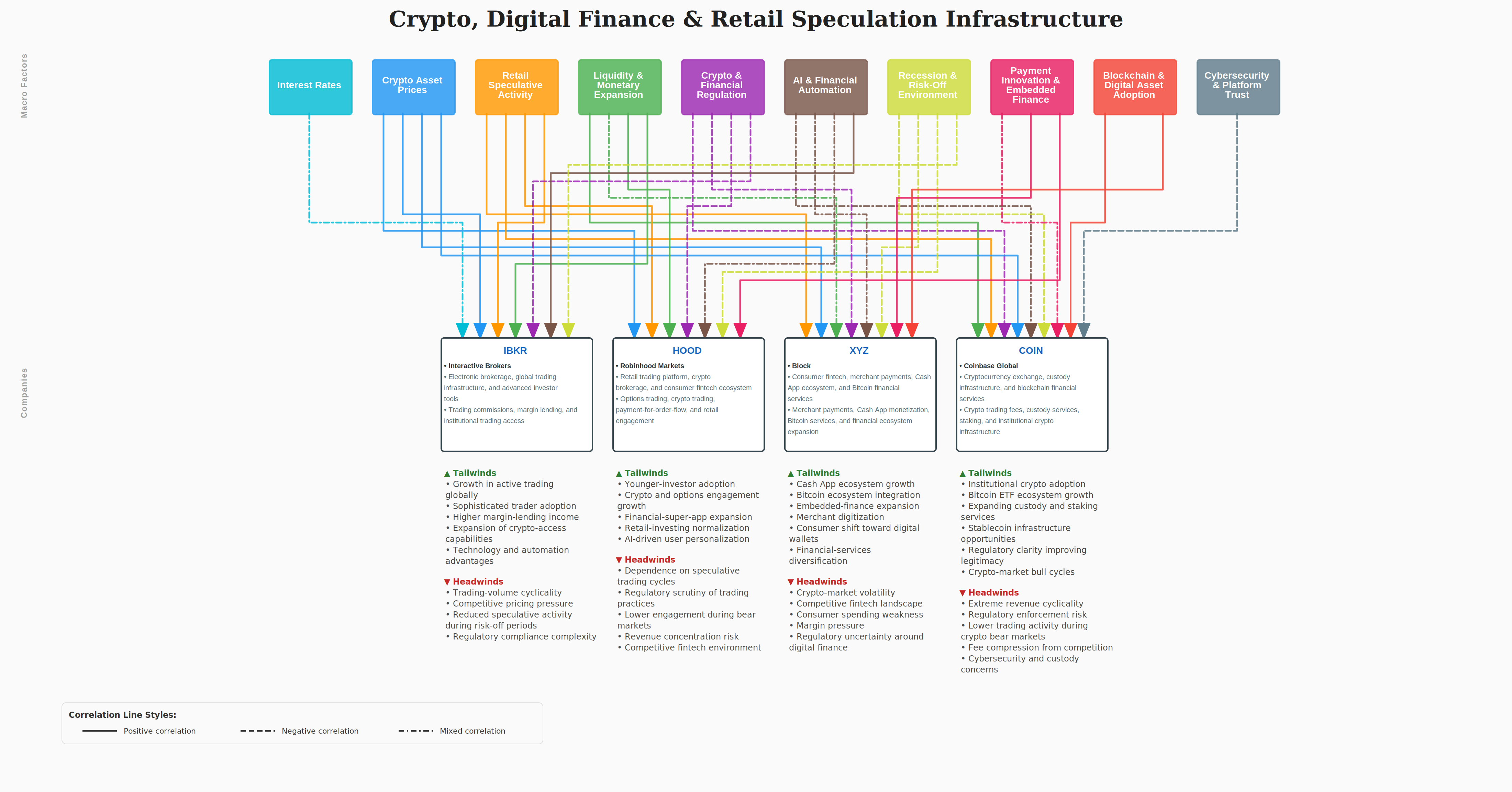
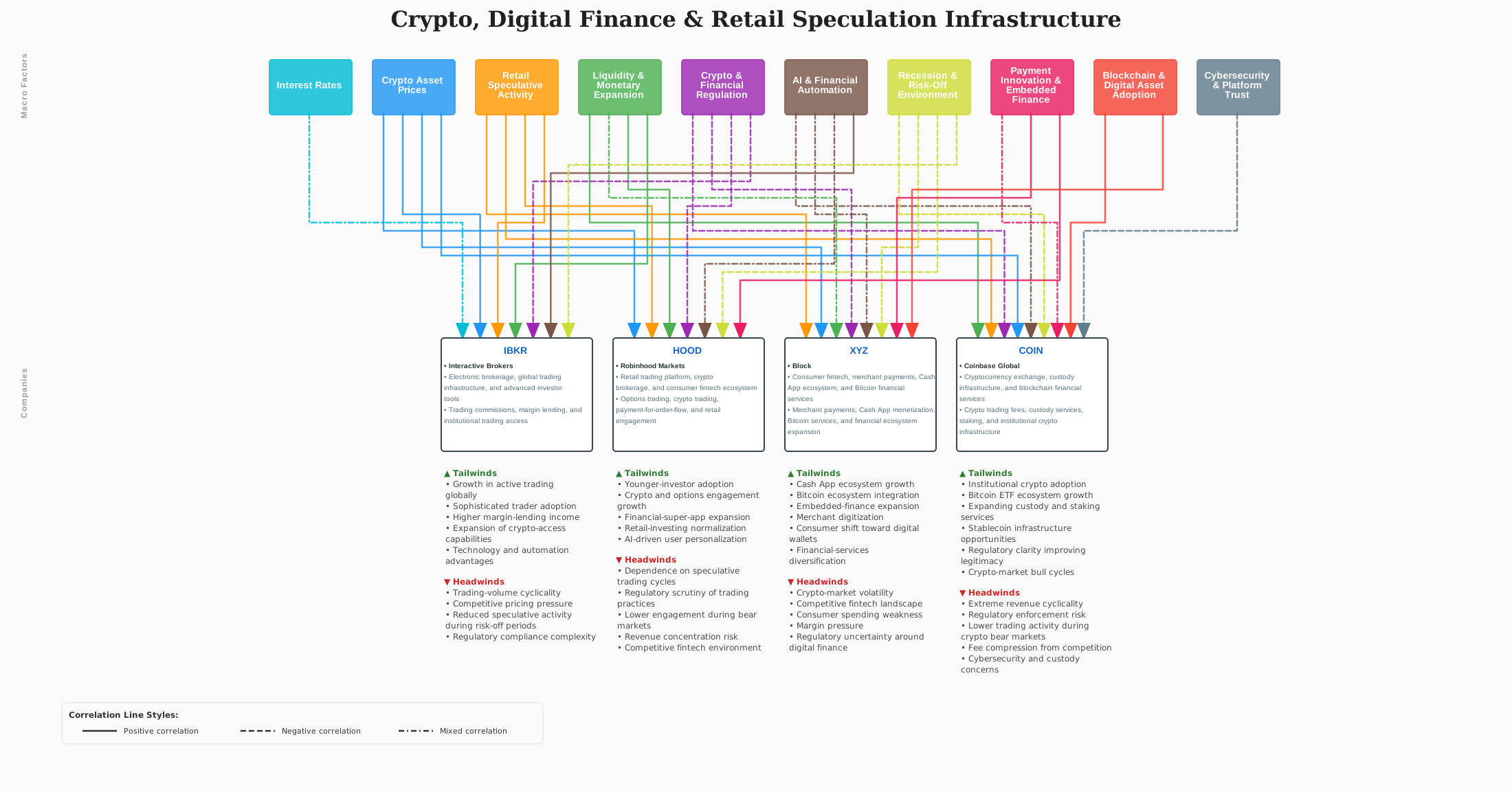
This emerging segment includes companies providing digital asset trading, custody, and blockchain-enabled financial services. Their growth is tied to cryptocurrency adoption, institutional participation, and regulatory clarity.
Methodology
These dependency maps were created using a systematic approach:
- Company Selection: Focused exclusively on S&P 500 financial sector constituents to ensure quality and liquidity
- Macro Factor Identification: Key drivers specific to each segment (interest rates, credit spreads, regulatory environment, etc.)
- Correlation Mapping: Analyzed positive, negative, and mixed correlations between factors and company performance
- Tailwinds & Headwinds: Documented specific business drivers and risks for each company
The visualization uses color-coded macro factors and line styles to represent correlation types:
- Solid lines: Positive correlation
- Dashed lines: Negative correlation
- Dot-dashed lines: Mixed or conditional correlation
Key Insights
Interest Rate Sensitivity
Most financial companies show positive correlation with rising interest rates, particularly banks and insurers who benefit from improved net interest margins and investment yields.
Credit Cycle Impact
Lending-focused segments (banks, alternative assets) show strong sensitivity to credit conditions, with regional banks and private credit most exposed to deterioration.
Technology Disruption
Payment networks and fintech processors benefit from secular digital transformation trends, while traditional capital markets face pressure from automation and decentralized alternatives.
Regulatory Environment
All segments face varying degrees of regulatory risk, with crypto/digital finance facing the highest uncertainty and traditional banks facing compliance cost pressures.
Using These Maps
These dependency maps serve as reference tools for:
- Portfolio Construction: Understanding factor exposures when building financial sector allocations
- Macro Regime Analysis: Identifying which segments benefit from specific economic conditions
- Risk Management: Recognizing concentration risks and hedging considerations
- Fundamental Research: Starting point for deeper company-specific analysis
Click on any map image to zoom in for detailed viewing, or download the files for offline analysis and presentations.
Last updated: May 11, 2026